



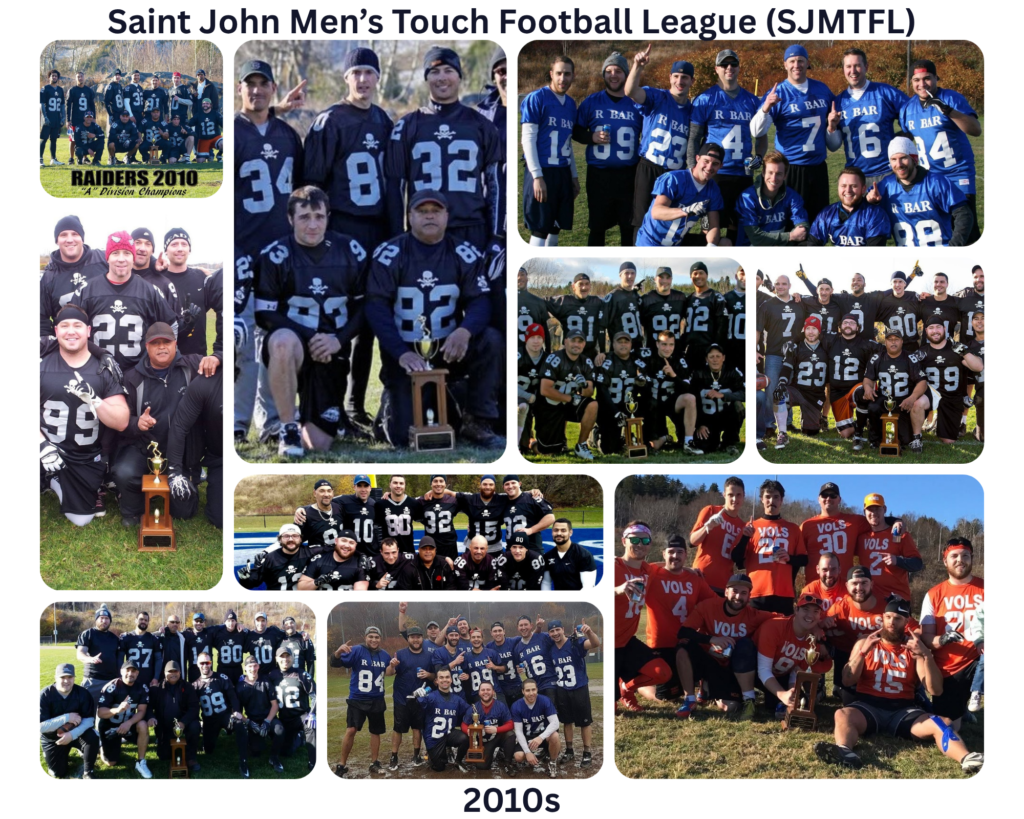
The 2010s represent the most transformative decade in league history, marking the closing chapter of the Raiders’ multi-decade dynasty and the emergence of a new, highly competitive era. It was a decade of transition, where one of the greatest franchises the league has ever known passed the torch to a new generation of contenders.
The decade began with the Raiders continuing the dominance that had defined the previous twenty years. From 2010 through 2015, they remained the league’s benchmark, capturing six consecutive A Division championships and extending their remarkable run to 11 straight titles (2005–2015). Year after year, the Raiders set the standard for excellence, while challengers such as the Outlaws consistently pushed them, creating one of the league’s greatest rivalries.
By the middle of the decade, however, the balance of power began to shift. New contenders such as Rage, Bandits, and other emerging clubs added greater depth to the league, making every season increasingly competitive. That shift became reality in 2016, when Rage captured the A Division championship, ending the Raiders’ unprecedented streak of 11 consecutive championships and signaling that the league had entered a new competitive landscape.
Although the dynasty had been interrupted, the Raiders had one more memorable chapter to write. The 2017 season would be the franchise’s final campaign, and they completed it the only way they knew how—by winning the A Division Championship. It was a fitting farewell for one of the most successful organizations in league history, closing an era that had shaped the league for nearly three decades.
Following the Raiders’ departure, the league quickly embraced a new identity. Championships were no longer concentrated in the hands of a single franchise but were shared among a growing group of contenders. Teams such as Rage, Volunteers, Bandits, and the Brick City Bombers helped usher in a modern era where competitive balance became the league’s defining characteristic.
By the end of the decade, the Volunteers had emerged as one of the league’s strongest regular-season teams, while Rage established itself as an early championship contender in the post-Raiders era. Rather than replacing one dynasty with another, the league evolved into a structure where multiple franchises could realistically compete for championships each season.
### Champions of the 2010s
- 2010 – Raiders / “B” – Greener & Sons Army
- 2011 – Raiders / “B” – Rage
- 2012 – Raiders / “B” – Mustangs
- 2013 – Raiders / “B” – Ice Men
- 2014 – Raiders / “B” – Hawks
- 2015 – Raiders / “B” – Rage
- 2016 – Rage / “B” – Bandits
- 2017 – Raiders (final season) / “B” – Brick City Bombers
- 2018 – Rage / “B” – Brick City Bombers
- 2019 – Volunteers / “B” – Bandits
Legacy of the Decade
The 2010s will forever be remembered as the decade that bridged two eras. It began with the continued excellence of the greatest dynasty in league history and ended with the league embracing unprecedented competitive balance.
The Raiders’ final championship in 2017 was more than another title—it was the perfect ending to an extraordinary story. They left the league exactly as they had defined it for so many years: as champions.
As the decade came to a close, a new generation of franchises had stepped forward to carry the league into its next chapter. The Volunteers, Rage, Bandits, and others laid the foundation for the modern era, where opportunity, parity, and new rivalries would shape the league’s future.
The 2010s weren’t simply the end of a dynasty—they were the beginning of a new age, setting the stage for the balanced and fiercely competitive league we know today.